Milk & Dairy Products Analysis: Why Quality and Safety Testing Matters
20 November, 2026
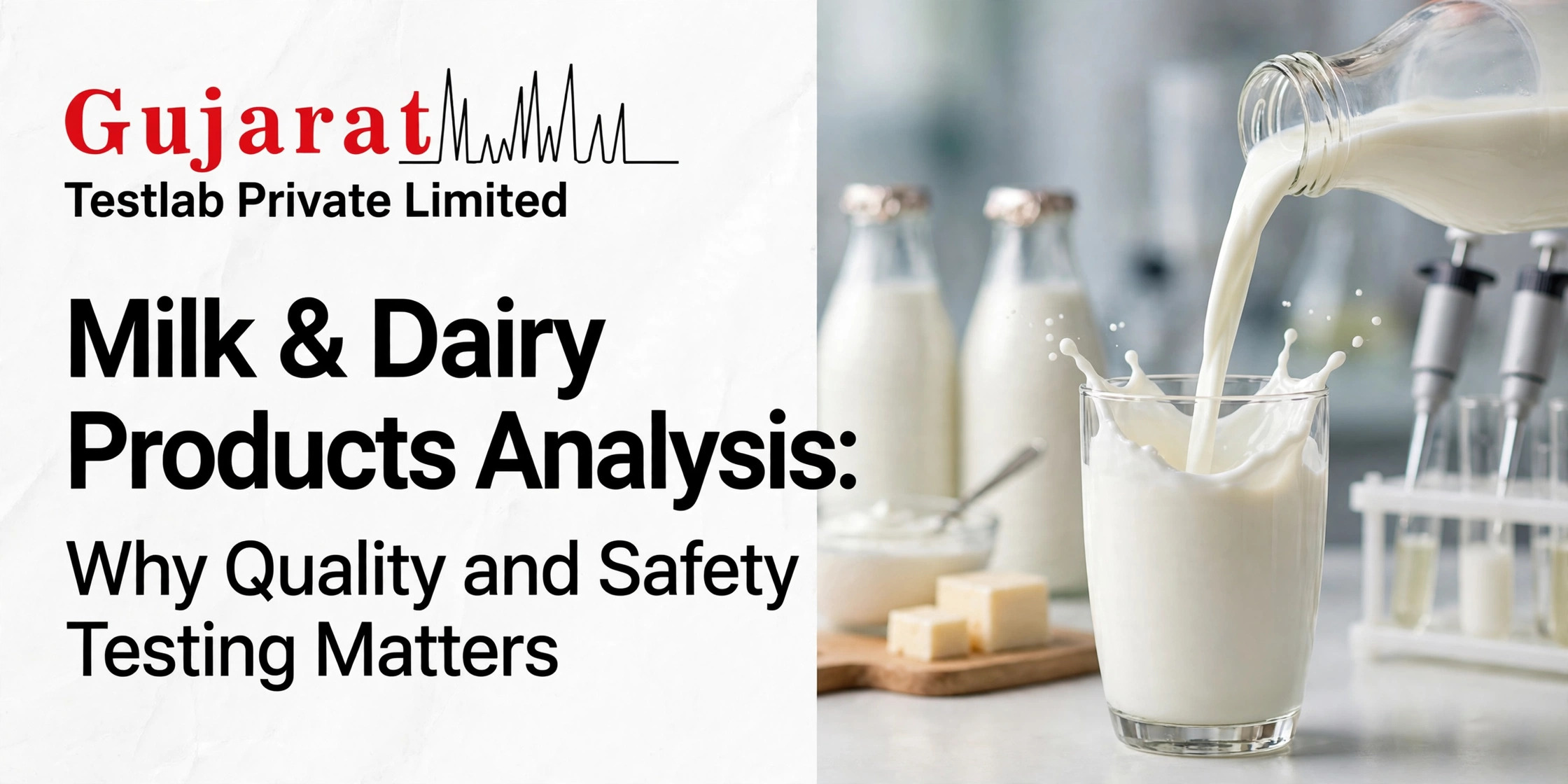
The significance of milk and dairy products is immense, because today these products have become a part and parcel of our diet. Milk and its products, which include fresh milk, curd, cheese, butter, paneer, and milk powder, supply us with essential nutrients like proteins, calcium, vitamins, and fats. However, the presence of these nutrients in any food item does not automatically mean that they are safe to consume.
This is where Milk & Dairy Products Analysis becomes highly significant. The process of scientific testing in laboratory facilitates assessment of product quality and detection of contaminants which may be present in any food item to meet the food safety requirements.
If you are a manufacturer of fresh milk, a processor of packed dairy products or even a supplier of dairy products, selecting a milk testing laboratory for your business is vital.
What is Milk & Dairy Products Analysis?
Milk & Dairy Products Analysis involves the analysis of milk and dairy products to determine the quality, composition and safety of these products. It includes various analytical methods to detect the presence of any unwanted components, chemical residues, contaminants etc. which may have any effect on product quality.
A specialized milk test laboratory analyzes the samples by using various analytical methods to ensure whether the products meet the required quality and safety standards or not.
Depending upon the product type and testing requirement, dairy analysis can include:
-
Pesticide residue analysis
-
Antibiotic residue analysis
-
Mycotoxin analysis
-
Melamine analysis
-
Cyanuric acid testing
-
Nutritional and compositional analysis
-
Microbiological analysis
-
Chemical contaminants and adulterants testing
These tests allow dairy companies to get an insight into the potential risks related to the quality and safety of the products.
Why is Milk Testing Necessary for the Dairy Industry?
Milk goes through various processes before reaching the consumers such as collection, transportation, processing, packaging and storage. Contamination of products may occur at each stage if proper quality control procedures are not maintained.
Laboratory testing helps the business to find out such problems before the product reaches the market.
1. Detection of Toxic Chemicals in Dairy Supply Chain
Toxic chemicals may get into the dairy supply chain via contaminated animal feed, farm activities, veterinary practices or environmental factors. Pesticide residues and veterinary drug residues are essential testing parameters.
Testing assists in detecting unwanted chemical substances as well as analyzing the compliance with relevant regulations in terms of their levels.
2. Detection of Antibiotic Residues
Antibiotics are often prescribed for the treatment of various infections in dairy animals. Nevertheless, the improper use of antibiotics may lead to the presence of antibiotic residues in milk.
Antibiotic residue testing allows dairy producers to control the presence of these residues and ensure better management of the quality of the raw milk.
3. Testing for Mycotoxins in Milk
Mycotoxins are toxic compounds which are produced by some types of fungi. Mycotoxins may get into the dairy supply chain due to the contamination of animal feed.
The testing of aflatoxin M1 in milk is especially important since this toxin may be formed in the milk if dairy animals consume the feed contaminated with aflatoxin B1.
4. Detecting Melamine and Cyanuric Acid
Melamine and cyanuric acid are chemicals which need consideration in the process of evaluating dairy product safety.
Their presence implies that there could be contamination or adulteration and therefore could pose food safety issues. Laboratory analysis is essential in detecting the presence of such chemicals in milk and dairy products.
5. Consistency in Product Quality
The process of testing is vital in ensuring the quality of the dairy product consistency in various production batches.
Important parameters for Testing in Milk & Dairy Products Analysis
The testing program for dairy products varies depending on the nature of the product in question and the standard requirements.
There are several test parameters for different dairy products and purposes. They include the following:
|
Testing Parameter |
Purpose |
|
Pesticide Residues |
Detection of agricultural chemicals |
|
Antibiotic Residues |
Detection of Veterinary drugs |
|
Mycotoxins |
Detection of any fungi including Aflatoxin M1 |
|
Melamine |
Detection of Melamine contamination |
|
Cyanuric Acid |
Detection of the presence of cyanuric acid |
|
Fat and Protein |
Evaluation of nutrition content |
|
SNF (Solids Not Fat) |
Evaluation of non-fat milk solids |
|
Microbiological Parameters |
Microbial detection |
|
Adulterants |
Detection of added substances |
Testing is not required for all dairy products at all times. One should select the appropriate testing parameters based on the sample type and requirements.
Dairy Products Requiring Testing in Lab
The testing of milk does not apply to only fresh or packed milk but is also done as per the requirements for different types of dairy products.
Some common dairy products include:
Liquid Milk
Different types of milk such as raw milk, pasteurized milk, standardized milk and packed milk may require testing of various types.
Milk Powder
The milk powder is a very common dairy product and testing is done to check the composition and presence of contaminants or chemical residue.
Cheese and Paneer
Cheese and paneer require proper quality and safety tests to ensure that the product remains consistent and free of contamination.
Butter and Ghee
Dairy fats such as butter and ghee also may require tests as per the requirements.
Curd and Yogurt
Tests are conducted on fermented dairy products to determine their quality and other product parameters.
How Can a Professional milk testing lab Help?
Selecting a proper milk testing laboratory is important for those businesses which want to obtain reliable analytical data and a well-developed quality assurance program.
The below is the manner in which a professional milk testing laboratory assists businesses:
Accurate Analytical Testing
The correct testing methodology aids in identifying contaminants and analyzing important attributes of the products.
Advanced Testing Laboratories
The use of advanced analytical tools aids in the identification of chemicals residues and other components in required quantities.
Correct Testing Procedures
Testing according to correct national and international standards makes the analysis more reliable.
Quality Assurance
Test results from laboratories aid manufacturers in determining the quality of the products and taking necessary actions to improve it.
Food Safety Standards
Correct testing assists food businesses in analyzing their products according to the required food safety standards.
When selecting a milk testing laboratory, it is important to consider the testing abilities, certification, analytical method
Why Opt for Gujarat Testlab for Testing of Milk & Dairy Products?
Opting for an experience laboratory can be vital for any manufacturer of milk or dairy products, food processor or business within the dairy industry.
The services of specialized trace analysis of milk and dairy products offered by Gujarat Testlab are designed to help business check key chemical safety parameters of their products.
The testing services offered by Gujarat Testlab for milk and dairy products include:
-
Pesticides Testing: Trace analysis of pesticides in milk and dairy products.
-
Veterinary Drugs Testing: Antibiotic residues test in milk and dairy products
-
Mycotoxins Testing: Trace analysis of mycotoxins in milk and dairy products
-
Melamine Testing: Melamine residue test in milk and dairy products
-
Cyanuric Acid Testing: Cyanuric acid test for milk and dairy products.
Gujarat Testlab uses national and international testing methods including AOAC, EU and in-house validated methods for the analysis.
The laboratory also emphasizes its ISO/IEC 17025:2017 NABL accreditation and other food safety accreditations. Businesses should ensure the scope of accreditation for their test.
Through enabling specialized analysis of dairy products, Gujarat Testlab allows businesses to make informed decisions about quality control and food safety.
How Often Should Milk and Dairy Products Be Tested?
This will depend on several factors including the nature of the product, production process and risks involved.
For dairy firms, testing frequencies may be determined by:
-
Quality of raw materials and suppliers’ record.
-
Changes in the production process.
-
Nature of the product and storage conditions.
-
Chemical and microbial risks.
-
FSSAI requirements.
-
Company’s own quality assurance guidelines.
Regular testing helps identify quality problems at an early stage as opposed to detecting such problems in whole batches of products.
FAQs On Milk & Dairy Products Analysis
1. What is Milk & Dairy Products Analysis?
Milk & Dairy Products Analysis refers to the process of scientifically analyzing milk and products made from milk in order to determine the composition, quality and safety of those substances. Tests that may be performed under this category include pesticide residue test, antibiotic residue test, mycotoxin, melamine and other related tests.
2. Why should milk be analyzed in the laboratory?
Laboratory analysis can help identify chemical contaminates, adulterants and other undesirable materials that cannot be identified using naked eyes or taste testing.
3. What can a laboratory analyze in the milk?
Parameters that may be analyzed in milk include pesticide residues, antibiotic residues, mycotoxins, melamine, cyanuric acid, fat, protein, SNF, adulterants and microbiological quality, among others, depending on the testing program.
4. Are pesticide residues in milk and dairy products analyzable in laboratory?
Yes. Laboratory tests can identify pesticide residues in milk and various dairy products. Analytical requirements will depend on the product being analyzed.
5. Why is Aflatoxin M1 testing important in milk?
The presence of aflatoxin M1 in milk is caused by feeding cows with aflatoxin B1-contaminated feed. This test will help determine the presence of the mycotoxin and assess the quality of dairy products.
6. How do I choose the right milk test laboratory?
Choose the laboratory which has all the necessary accreditations, appropriate analytical equipment, validated methodology, qualified technical personnel and adequate scope of services.
7. Does Gujarat Testlab provide milk and dairy product testing?
Yes. Gujarat Testlab provides trace analysis of milk and dairy products including pesticide residues, antibiotic residues, mycotoxins, melamine and cyanuric acid.
Conclusion
Milk and dairy products are significant elements of food chain and therefore their quality and safety must be guaranteed. The process of Milk & Dairy Products Analysis will allow companies to assess the quality of their products and improve their quality control measures.
Choosing the right milk testing laboratory will also allow for more effective decision-making.
Gujarat Testlab provides special services for testing milk and dairy products using the analytical techniques relevant at a national or international level. In case your organization needs efficient dairy trace analysis services, consider the testing abilities of Gujarat Testlab.